Beginner’s Guide to Fresh Milled Flour
If you’ve never used fresh-milled flour before, you might be wondering what all the fuss is about.
Is it really that different from the flour sitting on the grocery store shelf? Why would someone buy wheat berries and mill them at home instead of just buying a bag of flour?
We wondered the same thing.
At Quadruple J Ranch, milling our own flour has become one of those things that started as curiosity and turned into something we genuinely love. There’s something pretty special about taking a handful of wheat berries, milling them into flour, and turning that flour into a loaf of bread, a batch of cinnamon rolls, or a pan of muffins.
So, let’s start at the beginning.
What exactly is fresh-milled flour?
Fresh-milled flour is flour made by grinding whole wheat berries shortly before you use them.
A wheat berry is the whole seed of the wheat plant. It contains three main parts:
Bran – the outer layer of the wheat berry
Germ – the part that can grow into a new wheat plant
Endosperm – the starchy portion that makes up most of the wheat berry
When you mill a whole wheat berry, you get flour that contains all three parts.
Depending on how finely you mill and whether you sift it afterward, you can use the flour as-is or remove some of the larger bran particles.
At Quadruple J Ranch, we often sift our fresh-milled flour to create a lighter flour while still starting with freshly milled whole wheat.
How is fresh-milled flour different from regular flour?
The biggest difference is freshness.
Most conventional white flour has gone through extensive processing before it reaches the grocery store. Fresh-milled flour, on the other hand, can go from wheat berry to flour in minutes.
That means you’re starting with a whole grain and milling it when you’re ready to bake.
Freshly milled flour also behaves differently in recipes. It can have a slightly different texture, aroma, flavor, and water absorption compared with conventional flour.
And yes—you may notice a difference in the taste, and how you feel after you eat it. Most people notice differences in their health and feeling better day to day after chaining to fresh flour.
Fresh-milled wheat has a wonderful nutty, almost slightly sweet flavor. Once you start baking with it, it can be hard to go back.
Does fresh-milled flour taste different?
Absolutely.
This is probably one of the first things people notice.
Fresh-milled flour has a deeper wheat flavor than the very neutral flavor you may be accustomed to from conventional white flour. It can make something as simple as a piece of homemade bread taste much more interesting.
There’s also something satisfying about knowing exactly where your flour started.
Wheat berry → mill → flour → dough → bread.
That whole process can happen right in your own kitchen.
What are hard white wheat and soft white wheat?
You’ll often hear us talk about hard white wheat and soft white wheat.
They’re both types of white wheat, but they have different characteristics and are useful for different kinds of baking.
Hard white wheat
Hard white wheat has a higher protein content and is especially useful for yeast breads.
It works well for things like:
Sourdough bread
Sandwich bread
Dinner rolls
Pizza dough
Bagels
Other yeast-leavened breads
It has a mild flavor compared with red wheat, which makes it a favorite for people who want the benefits and flavor of whole-grain wheat without an especially strong wheat taste.
Soft white wheat
Soft white wheat has less protein and is better suited for many baked goods that don’t need the same gluten structure as bread.
We love it for things like:
Muffins
Cookies
Cakes
Quick breads
Pie crusts
Biscuits
It produces a tender, delicate crumb that works beautifully in pastries and other treats.
Think soft=sweet, hard=bread.
Can you use fresh-milled flour in any recipe?
Yes—but you may need to make a few adjustments.
Fresh-milled flour isn’t always a straight one-for-one swap for conventional flour.
It can absorb water differently, and freshly milled flour contains components that can affect dough structure. If you’re making bread, you may find that your dough needs more water than you’re accustomed to using.
This is one reason we recommend starting with a recipe specifically developed for fresh-milled flour rather than immediately substituting it into your favorite recipe.
And don’t worry if your first loaf isn’t perfect.
We’ve learned that baking with fresh-milled flour is a little bit of an experiment. You learn what your flour likes, how your dough should feel, and what works best in your kitchen.
That’s part of the fun.
What does sifted fresh-milled flour mean?
This is one of the questions we get asked most often.
When you mill a whole wheat berry, you’re getting the entire grain. If you sift that flour, you can remove some of the larger bran particles.
The result is a flour that is lighter and finer than unsifted whole-wheat flour.
Sifting doesn’t mean the flour wasn’t freshly milled. It simply means some of the bran has been separated out after milling.
And don’t throw that bran away!
Bran can be used in muffins, cereal, pancakes, breads, and plenty of other recipes.
At Quadruple J Ranch, we love finding ways to use every part of what we mill.
Is fresh-milled flour healthier?
Fresh-milled flour is made from whole wheat berries, so it starts with the entire grain rather than just the endosperm.
Whole grains contain naturally occurring fiber, vitamins, minerals, antioxidants, and other compounds. However, it’s important not to turn fresh-milled flour into a miracle food.
The overall nutritional value of a food depends on the grain, how it’s milled and sifted, how it’s stored, and how the finished food is prepared.
We don’t mill our own flour because we think one ingredient can magically fix everything.
We do it because we love knowing what we’re working with, we enjoy the flavor, and we like the process of making more of our food from scratch.
You are getting a whole food that is completely unprocessed, with no need to be “enriched” because nutrients are taken away by processing, unlike store bought flour.
How should you store fresh-milled flour?
Because fresh-milled flour contains the germ and more of the grain’s natural oils, storage matters.
For short-term use, keep your flour in an airtight container in a cool, dry place.
If you’re not going to use it quickly, refrigeration or freezing can help preserve its freshness.
We recommend milling what you’ll use regularly rather than keeping huge quantities of flour sitting around for months.
And if you’re buying fresh-milled flour from us, you can rest assured that it is milled to order to ensure the longest shelf life and freshness.
Why do we mill our own flour?
For us, it isn’t just about flour.
It’s about slowing down and making things ourselves.
We raise animals, grow what we can, bake from scratch, and are constantly learning new ways to make our little piece of the ranch more self-sufficient.
Milling wheat fits right into that.
There’s something incredibly satisfying about starting with a tiny wheat berry and ending up with a loaf of bread on the table.
And when that bread comes out of the oven, made with flour we milled ourselves, it just tastes a little more special.
That’s what we love about fresh-milled flour.
It isn’t complicated. It doesn’t have to be intimidating.
It’s simply a different way of approaching one of the most basic ingredients in our kitchens.
Ready to try fresh-milled flour?
If you’ve never baked with fresh-milled flour, start small.
Try a batch of muffins or cookies. Then try a loaf of bread. Pay attention to the texture of your dough and don’t be afraid to make adjustments.
You’ll quickly learn that fresh-milled flour has its own personality.
And once you get comfortable with it, you may find yourself looking at a bag of wheat berries and thinking about everything you could make with it.
That’s exactly how it started for us.
Welcome to the world of fresh-milled flour—and welcome to Quadruple J Ranch.
From our wheat berries to your kitchen, we’re excited to share what we’re learning along the way.
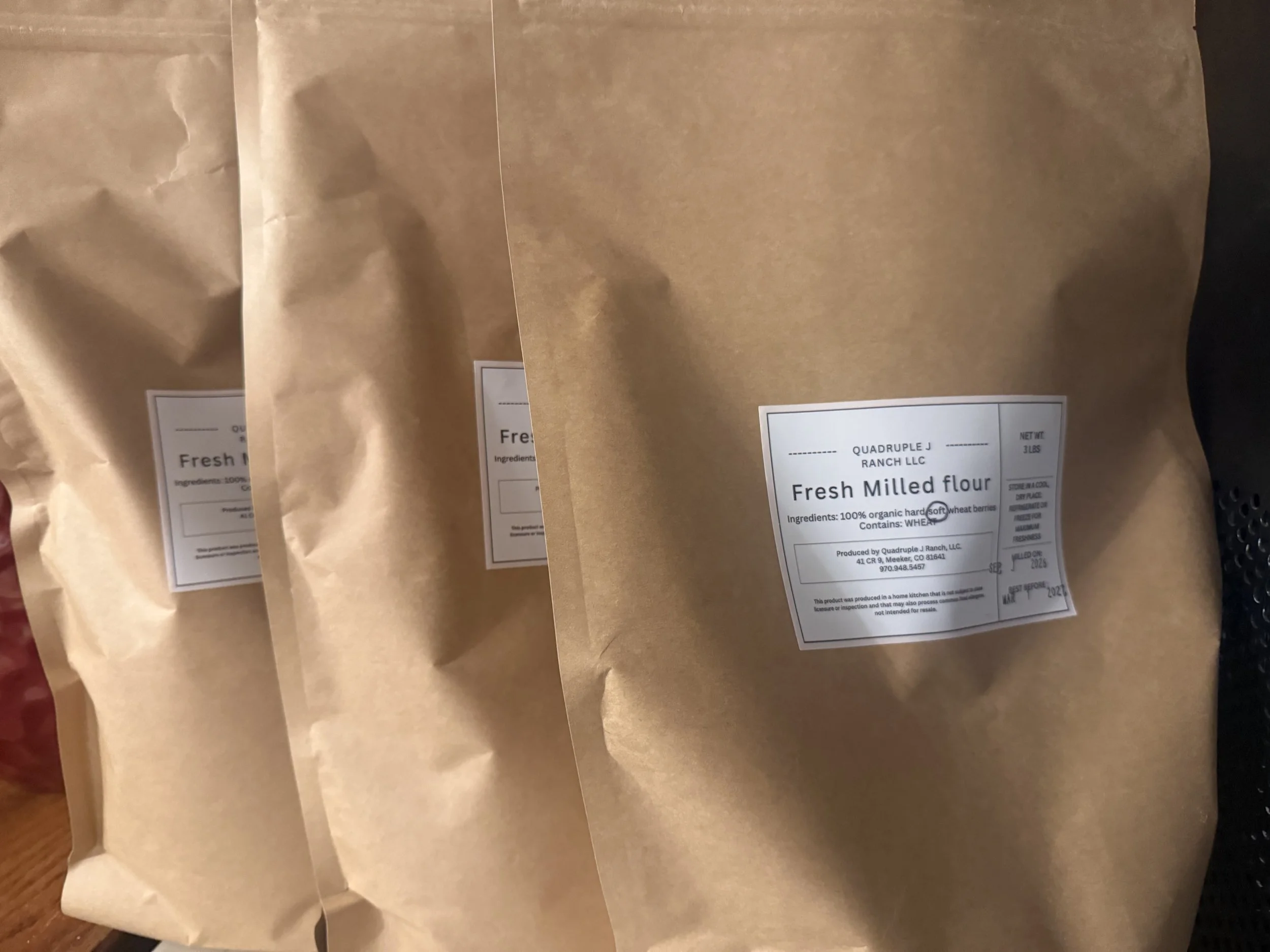
Our flour is made from certified organic and glyphosate residue free wheat berries, stone milled to order.
